By: Christine Lee
Bob Hawkins, “Cannes’ Early Days: Fest Was ‘Sheer Buff Heaven’” (Variety)

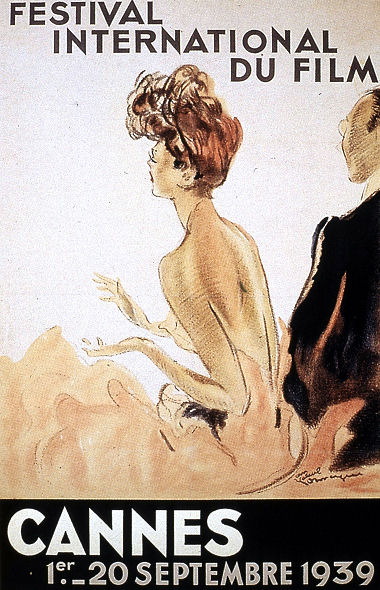
The first Cannes events were held on September 1, 1939 as an attempt to “lure attention away from Venice, the granddaddy of all film festivals”, as well an effort to increase tourism in order to give France a more glorified cultural image. It initially took place in Cannes’ gambling casino until the first Palais was established in 1949, and even at the same time as the Venice events. After some confrontation, Cannes moved its dates to the springtime, around April or May.
While the New York Times waited until 1955 for its first story about Cannes, Variety was there from the start, therefore able to witness its transformation over the years. Then, Promenade de la Croisette was narrow and had two lanes, and beaches were near-empty and restaurants-less. Over the years, it has boomed into quite the spectacle and is now known as one of the world’s most prestigious film festivals. But from the beginning, it was able to “unwrap a treasure chest of the best of the notable filmmaking countries and the oft-hidden talents that the event was able to lure into its international spotlight.”

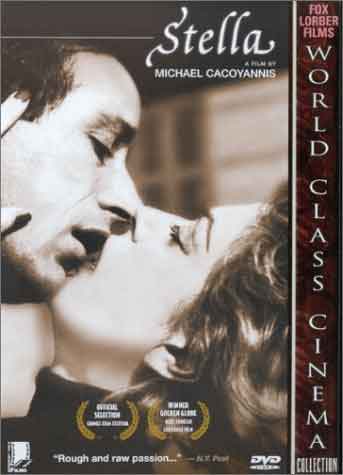
Films such as Emilio Fernandez’s “Maria Candelaria” (Mexico), Michael Cacoyannis’ “Stella” (Greece), and Teinosuke Kinugasa’s “Gates of Hell” (Japan), were given international fame as they became Cannes “discoveries”. Other countries include Hungary and Austria, but the most notable discovery was France and its New Wave, having to do with its rejection of classical cinematic form.

The film festival was further popularized by “Cannes happenings”. One such example is when British startlet Simone Sylva whipped off her bra and embraced Robert Mitchum. Pictures documenting this scandalous incident hit international press, causing for an apology by fest boss Robert Favre-LeBret who feared conservative backlash. Nevertheless, many celebrities, or aspiring ones, such as Brigitte Bardot and Grace Kelly, continued to appear in the Cannes spotlight.
The author ends by stating that Cannes inevitably changed into a “bigger” event due to the “increasing importance of the local film market” and implies “loss” of the earlier days that are now forever lost due to Cannes’ popularity boom.
Chris Darke, “Radical Chic” (Sight & Sound)
The Cannes film festival has now been around for about 60 years and according to the author, “has always been a political affair,” in direct reference to its origins – as a counterweight to the Venice film festival in the pre-war years. It is also known to have frequently served as “a lightning rod for expression of political and aesthetic radicalism.”

(via)
The location of Cannes on the Côte d'Azur allowed for a capitalization a regional association with the artistic avant-garde including Renoir, Monet, Cocteau, and Picasso. Yves Klein, an artist associated with the Ecole de Nice, executed one of his first neo-Dada acts by ‘signing’ the Riviera sky and calling it the “first and biggest monochrome”. All of this artistic expression and the “combination of the tuxedoed beau monde and artistic enfants terrible” proved to be combustible. During the fourth festival in 1951, Jean-Isidrore Golstein led shocks troops of the Parisian avant-garde, uninvited, into the festival to screen Isoul’s four-hour epic of anti-cinema Traité de Bave et d'Éternité. This directly influenced Guy-Ernest Debord to come back the following year as part of a ‘Lettrist commando team’, which lead to many arrests.
The enfants terrible continued to stir controversy as Francois Truffault, a open critic of the festival, was banned in 1958. Regardless, he still attended and his first feature Les Quatre Cents Coups went on to win the Best Director prize the following year. This demonstrated that one of the best ways Cannes could deal with its critics was to co-opt them into “the Cannes family”. Other shocking films are Marco Ferreri’s La Grande Bouffe and Jean Eustache’s La Maman et la Putain, selected as responses to the social upheavals of May 1968. They also reflected the rise of hardcore pornography. The most persistent and provocative of them all was Lars von Trier who called Roman Polanski “a midget” and did not even bother showing up to his own showing of Breaking the Waves.
In 1968, Cannes supported ‘champagne socialists’ and then was “caught up in the tumult of demonstrations and strikes that gripped France” and a group of film-makers even successfully shut down the festival, headed by Truffaut, Godard, and Louis Malle. Eventually, the festival was democratized and more open to world cinema as the protestors demanded. Quinzaine des Realisateurs (Directors’ Fortnight) was created to maintain that change. One of the direct results of the protests of 1968 was a change in the way films were selected. From 1971 and onwards, the festival itself nominated titles instead of competitor countries. This responded to “third cinema”, post-colonial liberation struggles and life under dictatorial regime. In conclusion, the radicalism of the 1960s has greatly impacted the defense of human rights.
David Gritten, “The Hunt for Roman Polanski”

Roman Polanski is probably one of the few film industry figures who polarizes opinions so sharply. He has had a tumultuous life since childhood. When he was eight, both of his parents were sent to concentration camps. Polanski managed to escape from the Krakow ghetto just before its liquidation and sought shelter with Catholic families in the Polish countryside. He was even used as target practice by a squad of German soldiers he unluckily ran into.
After the war, he decided to go to film school in Poland and directed a few shorts. His first feature-length film, Knife in the Water, made him an international star at the age of 29. He then proceeded to make a number of other notable films such as Replusion and Cul de Sac. His reputation for the films “were jarring and threatening; they seemed to match his view of the world.” His first American film was Rosemary’s Baby and it was a huge success. Hollywood openly embraced him.

In 1968, he married Sharon Tate who became pregnant with their first baby. Another tragedy struck when she was murdered by Charles Manson’s “family”. Upon her death, Polanski headed back to Europe and obtained French citizenship. He shot Macbeth in Britain, and then headed back to Hollywood for the peak of his career.
Chinatown became a universally proclaimed, timeless classic. “The movie industry was delighted for Polanski in the wake of his tragic loss, and public sympathy for him was never higher.” However, his liaison with 13-year old Samantha Gailey cast him in the dim light. Polanski was arrested and pleaded guilty to unlawful sexual intercourse. Polanski then spent 42 days in jail undergoing evaluation, but then fled to France, protected from extradition as a French citizen.
The author of this article then proceeds to question whether Polanski was fairly judged. No one in California had served jail time for a comparable offense in the previous two years, and Douglas Dalton, Polanski’s defense attorney, had even secured an agreement with Rittenband, presiding judge, that 42 days was sufficient time served. Polanski’s fleeing was probably due to the fact that the judge would incarcerate him regardless.
Is he nasty as he’s cracked up to be? “The thought occurs that while Polanski’s crime against Samantha Gailey was utterly wrong, the 1970s were a different time, and his behavior was not aberrant by prevailing entertainment-industry standards.” The author concludes by questioning why Roman Polanski was arrested now (the time the article was written), after settling in Paris and living a quiet, blameless life, obviously sympathizing with Polanski.
"God may have created Bardot, but has she finally fallen from grace?"

(via)
In this article, the author takes us through Brigitte Bardot’s life of fame, from its beginning to current day. She was born in Paris in 1934 to a Catholic, middle-class milieu. When she was only 15 she made her modeling debut in a fashion magazine. In the mid-1950s, she donned many magazine covers, including Elle, newspaper diary columns, and television in Europe and the USA. She was immediately set apart by her combination of eyes, pout, and attitude. In the 1960s, she made several hit records with Serge Gainsbourg, who was her lover. She also had affairs with Gilbert Becaud and Sasha Distel, other French singers.
“Every man deliquesced into a lather of sweat at just the thought of being in the same room as her.” Bob Dyland claimed his first song ever written was to Bardot, it was rumored that she and Jimi Hendrix had sex at Heathrow Airport shortly after their first meeting, and George Harrison reportedly married Patti Boyd because of her resemblance to BB. When she was only 18, she married Roger Vadim, a film director who wanted to get BB to the top. The film that jump started her career was “And God Created Woman”, which was previewed at Cannes, where Bardot caused quite a stir on the beach. “She became the embodiment of French minxiness.”
Her few good movies include Le Mepris (Contempt) and Vie Privee (A Very Private Affair). Regardless, she was stuck in a typecast life: “she was the timeless sex kitten, the much-married laspsed Catholic that brought men to destruction.” In 1973, she announced her retirement from the movies and became a strident supporter of animal rights. She also established the Brigitte Bardot Foundation for the Welfare and Protectino of Animals, and funded it with three million francs by auctioning off her own jewelery. However, in the last decade, she has shown alarming signs of racial intolerance. She has been fined and convicted of ‘inciting racial hatred’ against France’s five million Muslim immigrants.

(via)
The author concludes by stating that it is sad that a woman, who once represented “France’s dedication to liberty and republicanism has come to despise modern France and to symbolize race hatred and bigoted suspicion.”